Storyline Simulation Example
Create an Opportunities Report in Salesforce
Based on Real Work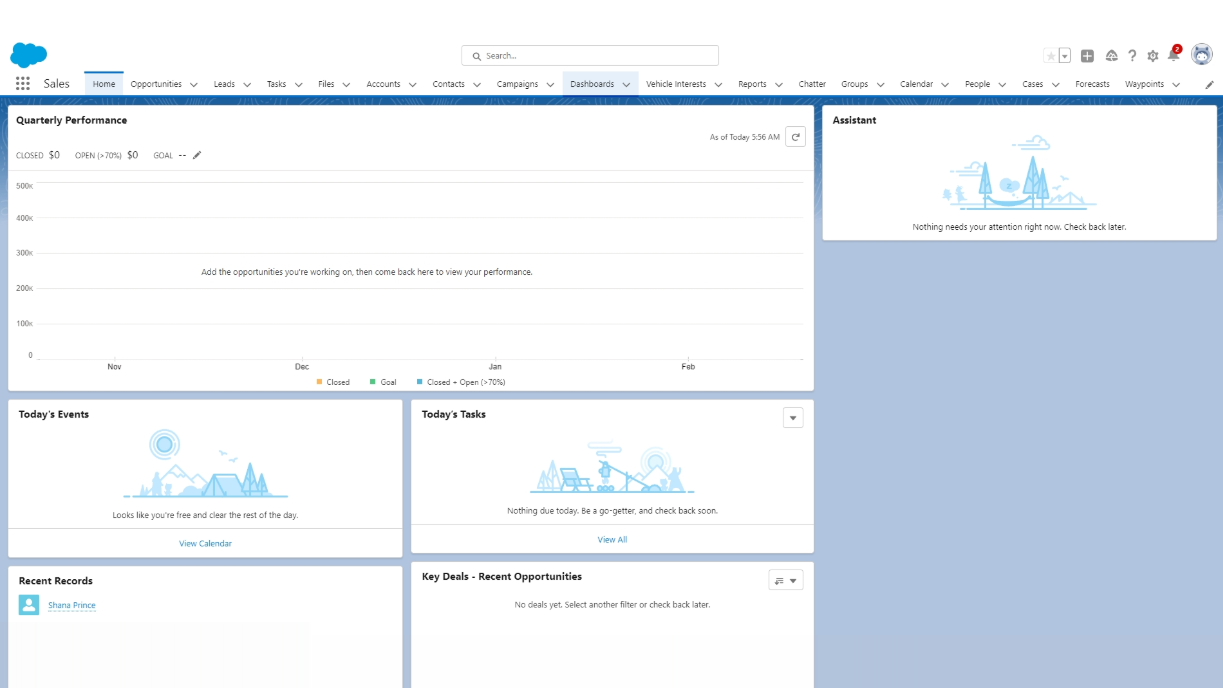
About this project
Situation
During my time in the auto finance industry, I was tasked with creating training and reference materials to help Regional Sales Representatives and their managers become proficient with updated Salesforce features and UI changes. The reps spent most of their time traveling to in-person appointments across their regions, so they needed to grasp new concepts quickly, often on the go, and see right away how the training connected to their work.
Task
Get the sales team proficient quickly without pulling them away from the field, and give them support they could return to whenever they needed it.
Action
I built a Salesforce toolkit that paired curated video walkthroughs with written, step-by-step instructions for quick reference. Using high-quality existing videos instead of producing new ones from scratch let me deliver the toolkit faster and focus my effort where it mattered most: organizing the content around the team’s actual tasks.
This Storyline 360 simulation extends that work for sales managers, the people responsible for building opportunity reports to track their team’s pipeline. Videos show learners what to do, but watching isn’t the same as doing, so the simulation adds hands-on practice without risking live data. It uses watch, try, and test modes to gradually shift responsibility to the learner, an “I do, we do, you do” approach. Managers first see a worked example, then complete the steps themselves with hints available, and finally perform the task independently. Introducing one layer of complexity at a time manages cognitive load, so they can focus on the workflow instead of the interface. The simulation is designed for tablets and laptops, while the toolkit remains the go-to resource for quick reference on a phone.
Result
The original toolkit helped reps and managers reach proficiency quickly, reduced how-to requests for building reports, and earned positive feedback for fitting into a schedule that rarely put the team at a desk. The simulation builds on that success by giving managers the practice that helps a critical reporting skill last.
Takeaway
Performance support and practice do different jobs, and the strongest solutions use both, matched to the right audience. The toolkit gave the whole team answers at the moment of need. The simulation focuses deeper practice on the managers who actually build the reports, closing the gap between knowing the steps and performing them. Because it looks and behaves like the real system, those skills carry over to the job, and that’s what moves training from quick exposure to lasting behavior change.
Tools used
- Articulate Storyline 360
Opens in a new tab.