Vyond Example
Invention Disclosure Process Intro
Consulting Project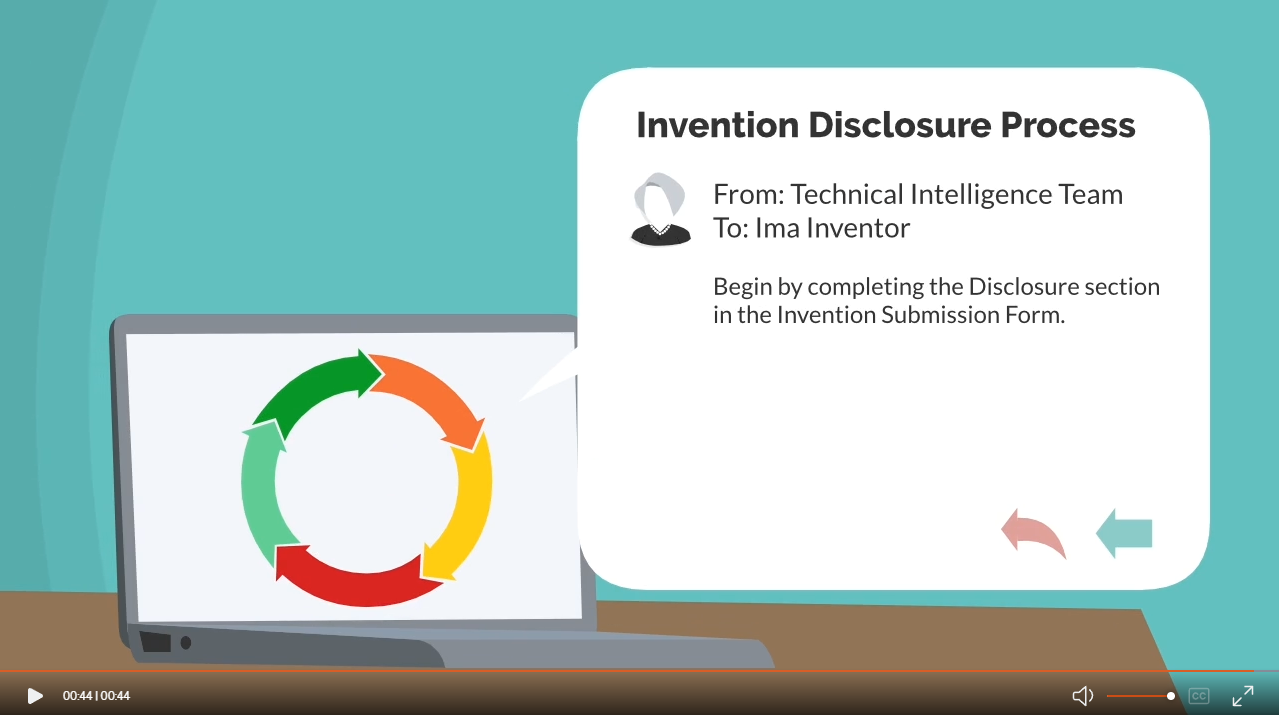
About this project
Situation
Through my consulting practice, I worked with a client in the food and beverage industry that was launching an updated invention disclosure process and system. Valuable ideas from R&D, product teams, and employees across the company were going unreported, often because people didn’t recognize their ideas as inventions or didn’t know how to submit them.
Task
Create an engaging training video that helps employees understand why disclosures matter, recognize when an idea is worth submitting, and know exactly how to submit it in the new system.
Action
I scripted and animated a character-driven video in Vyond that translates legal and intellectual property language into plain, conversational terms. Using a relatable story instead of a policy walkthrough helped employees see themselves in the situation and understand what was in it for them and the company.
To show the full process, I embedded screen captures of the updated system directly into the animated setting, so learners could follow the characters through each step of submitting a disclosure. Blending story with real system screens kept the video engaging while giving people a clear, accurate picture of what they would actually do. Behavior change happens when people are motivated, able, and prompted to act, so the video addresses all three: why it matters, how simple the process is, and a clear call to action.
To protect the client’s confidential information, the sample shown here is the introduction only.
Result
The client adopted the video as the standard training for the launch and shared positive feedback on how approachable it made the process. The legal and IP team also saw fewer questions, since employees came in with a clearer understanding of what to submit and how.
Takeaway
Animation and storytelling make dry, compliance-heavy topics approachable, and pairing them with real system screens connects the “why” to the “how.” When people understand why something matters and can see exactly how to act, they’re far more likely to follow through, and that’s where training turns into real behavior change.
Tools used
- Vyond
Opens in a new tab.